
Article by:
Ma. Teresa Montemayor
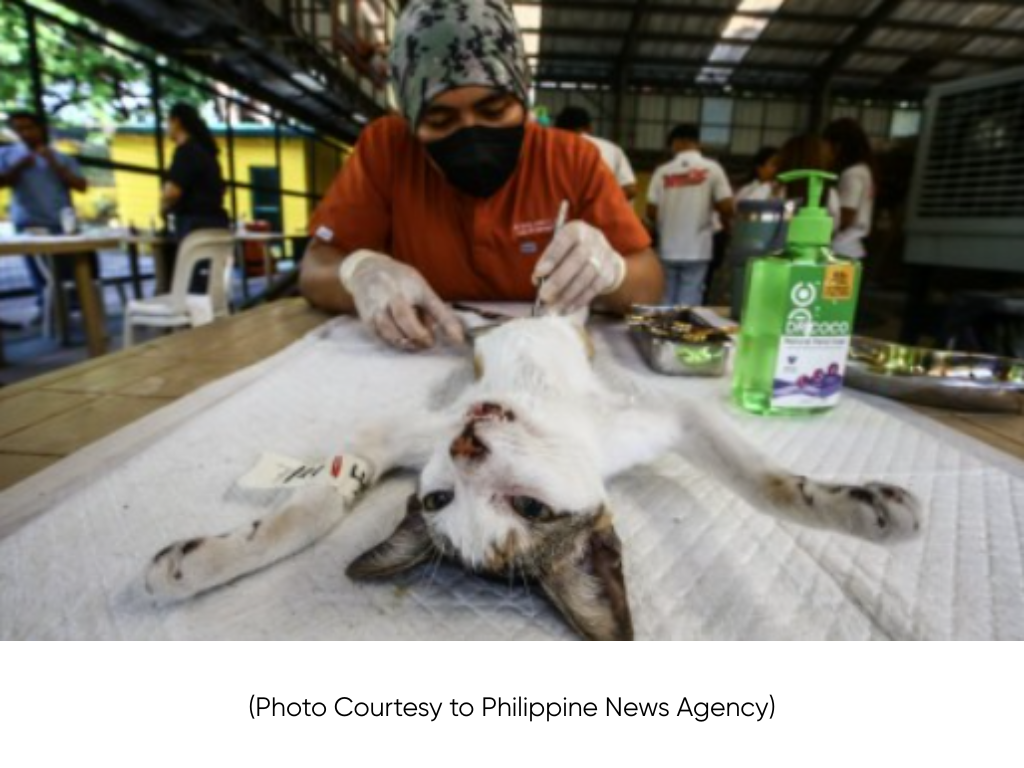
MANILA – Ensuring that every local government unit (LGU) has a designated municipal veterinarian is crucial in lowering rabies cases and strengthening disease prevention efforts, a veterinary medicine specialist said Thursday.
University of the Philippines Los Baños College of Veterinary Medicine Dean Dr. Maria Amelita Estacio underscored that having a veterinarian at the municipal, city and provincial levels allows LGUs to plan and implement programs addressing animal welfare, prevention and treatment of animal diseases, including rabies, African swine fever and avian influenza.
“Una-una sa lahat, kaya maganda na may veterinarian sa municipal level, provinces and cities kasi (To start with, it’s beneficial to have veterinarians in every municipality, province, and city because) you can come up with different activities addressing animal welfare concerns and animal diseases,” Estacio told Philippine News Agency on the sidelines of the UP National Institutes of Health 28th Anniversary Conference at the Ramon Magsaysay Research Center in Manila.
She noted that rabies prevention, in particular, requires organized and sustained vaccination campaigns, which can only be effectively carried out if there is a designated point person in charge of animal health.
“With the veterinarian in a municipality, the doctor would be able to survey how many dogs and cats there are, plan how many vaccines are needed, and schedule vaccinations in the different barangays,” she said.
“The possibility of lowering the rabies cases is high with a veterinarian in the municipality.”
At present, veterinarian positions are commonly available in provinces, cities and first-class municipalities, following a circular from the Department of the Interior and Local Government (DILG).
However, many second- to sixth-class municipalities still lack permanent veterinary posts.
Without a municipal veterinarian, the expert said there is no dedicated official to plan and oversee animal health programs, creating a gap in the so-called “One Health” approach that links animal health, human health and environmental health.
“If you do not have a point person for animal health in that municipality, then one important sector is missing in addressing overall public health,” she said.
The presence of a municipal veterinarian is also vital during disasters such as floods and volcanic eruptions, she added, citing the need for rescue, treatment and temporary shelter for affected animals.
Animal welfare responsibilities include stray dog and cat management, which has direct implications on rabies control.
The expert said LGUs should have ordinances requiring pet registration, vaccination, and responsible ownership, as well as animal shelters to manage strays.
“Risk din kasi ‘yan na pagala-gala ang strays. Mas maganda kung may shelter ang municipality at may measures kung paano aalagaan ang mga ito (Having strays roaming the streets is a risk. It’d be much better if the local government provided a shelter and a clear plan for their care),” she said, stressing the need for budget allocations for vaccination, deworming, feeding and health checks.
To attract and retain veterinarians in LGUs, the specialist emphasized the importance of competitive compensation, permanent or tenured positions, and strong support from local chief executives.
“Bukod sa salary, dapat may budget din for activities. Mahirap kung may plano ka pero hindi naman ma-implement, (Aside from salary, there should also be a budget for activities. It's difficult if you have plans but cannot implement them),” she said, adding that permanent plantilla positions ensure continuity of programs even with changes in administration.
She also recommended that a municipal veterinary office be composed of a senior veterinarian, junior veterinarians, and trained support staff to cover all barangays effectively.
While there is no fixed veterinarian-to-animal ratio due to varying animal populations across provinces, the expert said areas with dense livestock and poultry production require stronger veterinary presence to ensure food safety and disease control.
Ultimately, she said institutionalizing a “one vet, one municipality” policy would significantly help reduce rabies incidence, especially during peak months.
Animals and communities can better be protected against rabies with an organized vaccination program and a dedicated team in place in LGUs, she added.
The Department of Health (DOH) has recorded 260 rabies cases nationwide from Jan. 1 to Sept. 20, 2025.
It noted that 95 percent of these infections were linked to animals that were unvaccinated or had unknown vaccination status.
From 2020 to 2024, the DOH logged a total of 1,750 rabies deaths.
The agency has yet to release updated nationwide data on rabies cases. (PNA)
 Log in with Google