
Article by:
Wilnard Bacelonia
MANILA – Senators on Thursday called for stronger protection for local farmers as onion prices continue to fall at the farm level despite rising production costs.
During a Senate hearing in Muñoz City, Nueva Ecija, Senator Francis Pangilinan said the ongoing energy crisis is compounding challenges in the agriculture sector, driving up costs from production to transport, and affecting food prices.
He noted that farmers are being forced to sell onions at or near production cost, while market prices remain high, pointing to possible distortions in the supply chain and possible manipulation in pricing.
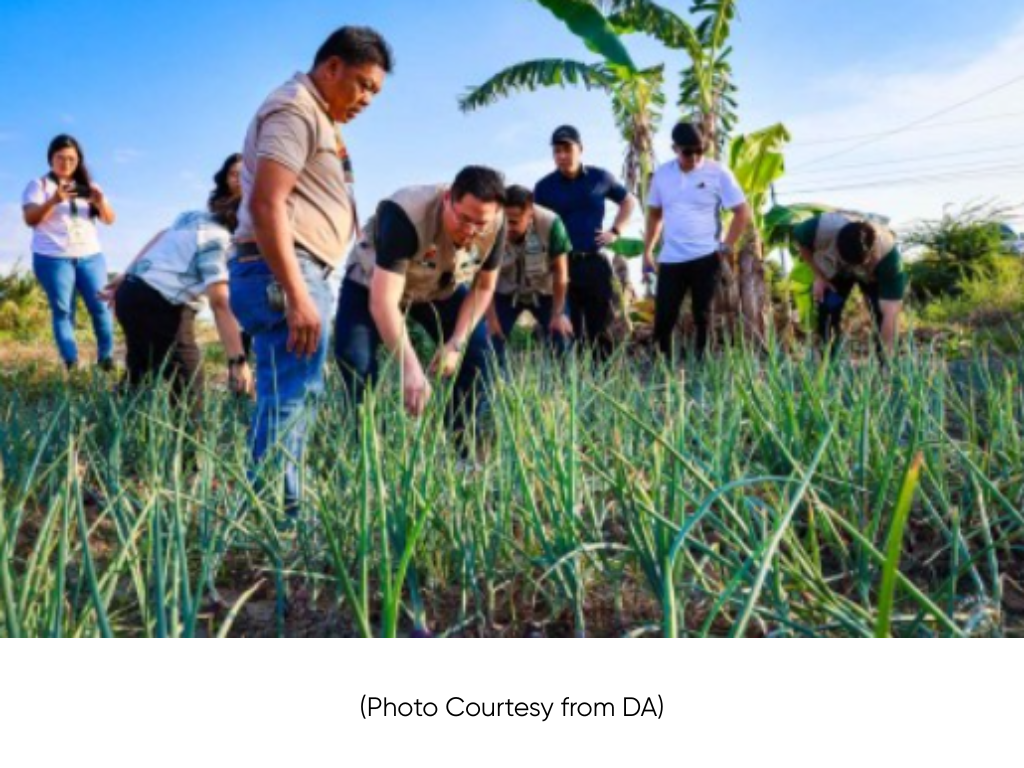
The Senate hearing was held in Nueva Ecija, considering the country’s “onion capital,” as senators investigate the sharp drop in farm-gate prices and alleged irregularities in importation, storage, and market practices affecting local producers.
Meanwhile, Senator Joseph Victor “JV” Ejercito warned that the sharp drop in farm-gate prices reflects deeper structural issues in the agriculture sector.
“Malinaw na may mali sa sistema. Tumataas ang gastos ng ating mga magsasaka – dahil sa langis, pataba, at transportasyon – ngunit ang kanilang kinikita ay patuloy na bumabagsak (It is clear that something is wrong in the system. Farmers’ costs are rising – due to oil, fertilizer, and transport – yet their earnings continue to decline),” Ejercito said.
He said the situation goes beyond normal market fluctuations and may indicate systemic failures affecting farmers’ livelihoods and the country’s food security.
Senate President Pro Tempore Panfilo Lacson questioned the government’s importation policy even as data show that the country is nearing onion self-sufficiency.
He said the Philippines produced about 264,000 metric tons of onions in 2024, close to the 279,270 metric tons needed for self-sufficiency, yet imports reached 94,000 metric tons in 2025.
“So, the question is, how much was harvested in 2025? You said 279,000 metric tons is self-sufficient, and we’ve even exceeded that. So why did we import so much – 94,000 metric tons in total in 2025? Our shortfall wasn’t even close to 94,000 metric tons,” Lacson said.
He warned that continued importation during peak harvest season undermines local farmers.
Ejercito also cautioned that excessive and poorly timed importation distorts the market and displaces local producers.
“Excessive and poorly timed importation is not a solution – it is part of the problem… Kung magpapatuloy ito, hindi na po krisis ang haharapin natin – kundi tuluyang pagbagsak ng lokal na produksyon (If this continues, we will face not just a crisis but the collapse of local production),” he said.
The senators also raised concerns over possible hoarding, profiteering, and the widening gap between farm-gate and retail prices.
They underscored the urgency of government intervention to ensure fair pricing, protect farmers’ incomes, and safeguard the country’s food security. (PNA)
 Log in with Google