
Article by:
Joyce Ann L. Rocamora
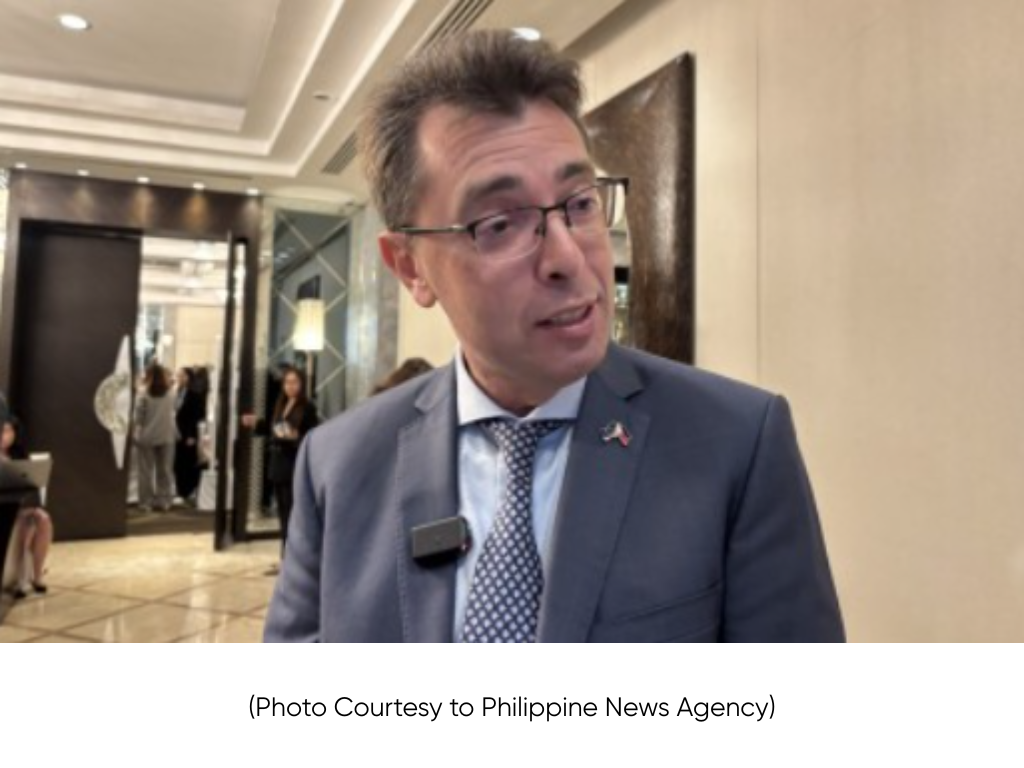
MANILA – The Philippines was able to utilize around 80 percent of its trade perks under the European Union’s (EU) Generalized Scheme of Preferences Plus (GSP+) in 2025, EU Ambassador to the Philippines Massimo Santoro said Tuesday.
“We went around 80 percent. It's a super high utilization rate by the Philippines of the current GSP+ that we have,” he said at a Stratbase ADRI forum in Makati City.
“It is ending in 2027. So, this is why I was mentioning before the FTA (free trade agreement) that I'm very much hopeful that this is the right year (to conclude),” he added.
The GSP+ is an incentive scheme that grants the Philippines zero percent tariffs for almost 7,000 EU product lines provided that it complies with its obligations to 27 international conventions covering good governance, and human and labor rights, among others.
The Philippines is currently the only Southeast Asian state that benefits from the EU GSP+ scheme.
At present, EU is also negotiating on a bilateral FTA with Manila, discussions of which are anticipated to conclude within 2026.
Citing the latest round of talks, Santoro said “all ingredients so far are pointing in the direction (of concluding the deal this year).”
“Both the Philippines and the European Union team, are doing an amazing job. It's a great synchronisation of targets and of efforts," he said.
“[W)hen we observe what's happening around the world, I think that I cannot but confirm that the reduction or bringing to zero of the tariffs in our trade relationship cannot but help both the European Union and the Philippines. So, I'm very confident that it is the right year,” he added.
Middle East conflict
Santoro said the current dynamics in the conflict-affected Middle East is also expected to further reinforce the two partners’ relations both politically and economically.
“The moment that this current ongoing conflict in the Middle East continues, extends in time, this becomes challenging not for the bilateral relationship between the EU and the Philippines, but reciprocally for global supplies, for energy-related issues,” he said. “In that case, this could be potentially an additional terrain where to work together between the EU and the Philippines.” (PNA)
 Log in with Google