
Article by:
Ruth Abbey Gita-Carlos
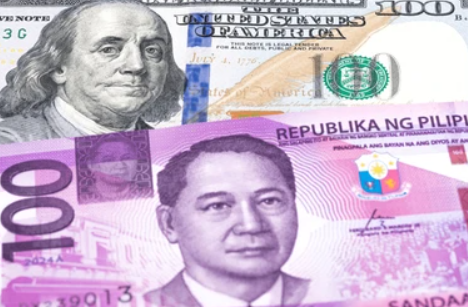
MANILA – President Ferdinand R. Marcos Jr. has ruled out the aggressive use of the Philippines’ foreign exchange reserves to defend the peso, describing the move as ineffective amid strong global forces driving the U.S. dollar.
In an exclusive interview with Bloomberg on Tuesday, Marcos stressed that while the government maintains a policy of supporting the peso within reasonable limits, spending the country’s reserves to prop up the currency would be “futile.”
Marcos cited geopolitical tensions in the Middle East as key drivers of a stronger U.S. dollar and behind the local currency’s continued depreciation.
He also attributed the dollar’s resilience not just to its traditional role as a safe-haven currency but also to the United States’ position as one of the world’s largest oil producers.
“With the dollar moving the way it is, and it's moving, whereas before the dollar was seen as a safe harbor currency, when you look deeper into it, the dollar's movement increase in value has been really because they're the largest oil producer,” he said.
“And considering that, then I think it would be even futile to try to spend all of our foreign reserves on defending the peso,” Marcos added.
Marcos admitted that the Middle East crisis has intensified pressure on currencies in middle-income economies such as the Philippines.
“The impact of all of this, of the war, of the war in the Middle East, is really to the middle-income and lower-middle-income countries. And we are a middle-income country,” he said.
Despite this, Marcos said peso depreciation has an offsetting effect through remittances from overseas Filipino workers, which are largely denominated in dollars.
He, however, acknowledged that the gains are not enough to fully counterbalance the broader impact of a weaker currency.
“The remittances are paid in dollars. And so there will be an increase, but that doesn't make up for the drop in the dollar to peso,” Marcos said.
The temporary easing of tensions in the Middle East provided relief to the Philippine financial markets, with both the stock market and the peso recovering on Tuesday.
The Philippine Stock Exchange index (PSEi) rose 0.63 percent to 5,936.20 points, and the broader All Shares by 0.57 percent to 3,295.23 points.
Long-term growth strategy
Despite the challenges faced by the country, Marcos remained confident that the Philippine economy can return to a growth trajectory of above 6 percent.
This was after the country posted a 3 percent gross domestic product (GDP) growth in the fourth quarter of 2025, one of its weakest performances in years outside of the pandemic period.
“We believe we can,” Marcos said, when asked if the Philippines can attain its originally projected growth of 6 to 7 percent.
“We’re going to manage 6 to 7 percent. And that figure was something that we came up with internally. But as well, the other financing institutions and the banks seem to have had the same opinion. Because the improvement in our grade on S&P was going to improve,” he added.
Marcos stressed the need to “redraw” everything amid the Middle East crisis, citing the need to boost investments and enhance the country’s competitive position in high-value industries.
He noted that the country’s semiconductor sector, the Philippines’ largest export in dollars, serves as a critical driver.
He added that the shift from basic manufacturing toward more advanced design capabilities places the Philippines in a favorable position to benefit from emerging technologies such as artificial intelligence and the expansion of data centers.
Marcos also emphasized ongoing efforts to improve the ease of doing business, including reforms to tax incentives and increased digitalization of government processes.
“Then of course, oil does what it does, but it was fairly steady at USD72 per barrel for a good while. So those are the bases that we were calculating,” he said. “Right now, things change every day. So, we have to model that and recalculate that. So, we'll have to see how long this problem lasts, how long it will take to readjust.”
Fund realignment
Senators on Wednesday weighed about either borrowing or realigning existing funds to finance government measures amid the oil crisis.
Senate President Vicente Sotto III said borrowing may be necessary in emergencies if used properly.
“Kung para sa taumbayan, eh okay lang mangutang… basta tamang paggamit (If it is for the people, borrowing is acceptable… as long as it is properly used),” he said.
Sen. Risa Hontiveros, however, said borrowing should be a last resort, urging the use of available funds and realignment of spending.
“Medyo last priority sana natin pag-uutang (Borrowing should ideally be our last priority),” she said.
She also reiterated her push for the PHP52.8-billion supplemental budget to expand aid for transport workers, farmers, fisherfolk and repatriated overseas Filipino workers, citing available funding sources and possible spending realignment. (Wilnard Bacelonia/PNA)
 Log in with Google