
Article by:
Ma. Cristina Arayata
MANILA – Lava effusion is a normal occurrence in active volcanoes, but communities should watch for lava flows, the head of the Philippine Institute of Volcanology and Seismology (Phivolcs) said Thursday.
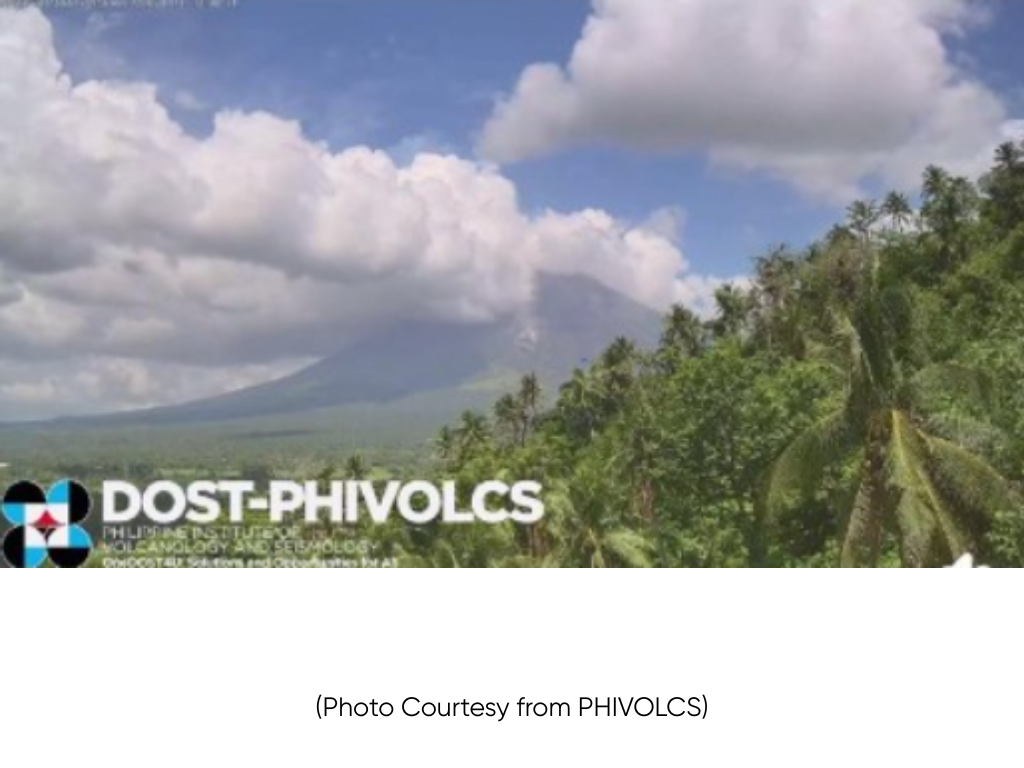
The Phivolcs captured a two-minute lava effusion at Mayon Volcano on Thursday, which generated an ash plume that reached 700 meters high.
"Lava effusion happens when magma reaches the surface and releases pressure gradually. It is usually less explosive," Phivolcs Director Teresito Bacolcol told the Philippine News Agency in an interview.
He explained that lava effusion does not automatically produce an ash plume, but it can still produce small ash emissions and is normal for many active volcanoes.
Lava effusion is the process of lava coming out of the volcano. Lava flow, on the other hand, is lava already moving downslope.
Bacolcol clarified, however, that if the magma is viscous and the gas is trapped, an explosive eruption is possible.
He, thus, reminded the public that with the recent activity in Mayon Volcano, they should watch for lava flows, rockfalls, pyroclastic density currents, and ash emissions.
Lava flow could collapse and breach the 6-km. permanent danger zone (PDZ), he said.
"It can incinerate everything on its path," Bacolcol said.
He reminded the public to stay out of the PDZ, and to follow the advisories from Phivolcs and local government units. (PNA)
 Log in with Google