
Article by:
Jose Cielito Reganit
MANILA – Speaker Faustino “Bojie” Dy III on Thursday reaffirmed his commitment to open and honest public dialogue as the House of Representatives kicked off nationwide consultations on the proposed Anti-Political Dynasty Act, seeking broad public input on the long-pending reform.
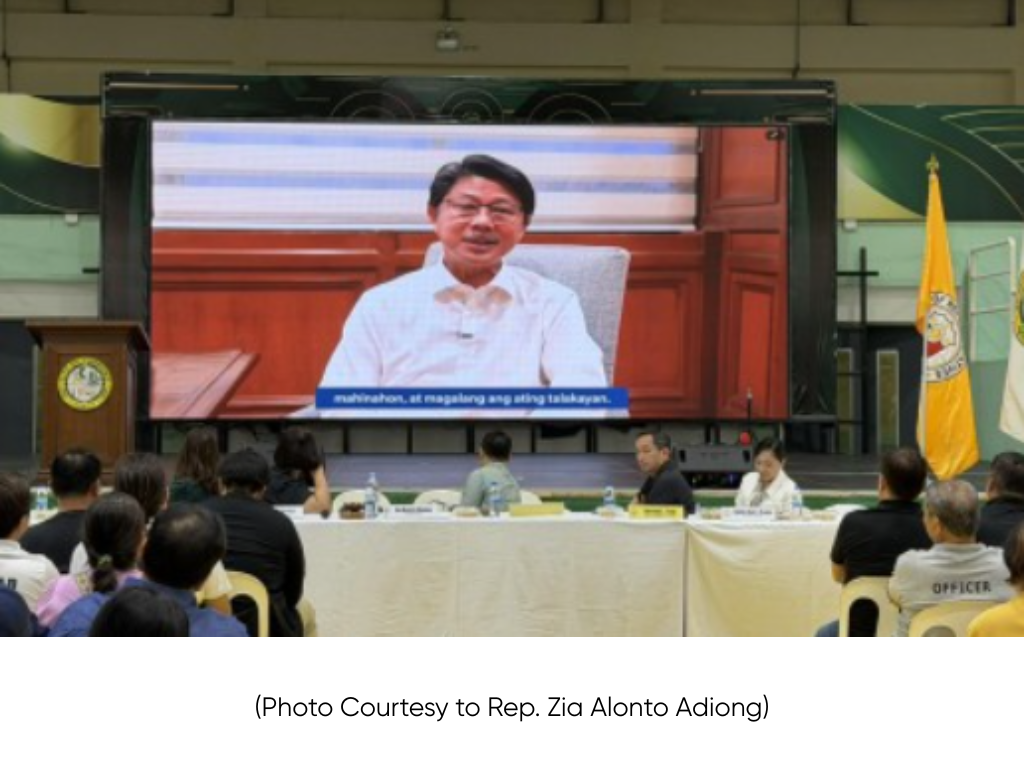
The first consultation was held at the Carsigma Gym along Sugar Road in Carmona City and was presided over by Lanao del Sur 1st District Rep. Zia Alonto Adiong, Chair of the House Committee on Electoral Reforms and Suffrage.
In a video message, Dy said the consultation process reflects the chamber’s commitment to shaping major and politically sensitive legislation through transparent and sincere dialogue with the Filipino people.
“Ang mga konsultasyong ito ay bahagi ng paninindigan ng Kapulungan ng mga Kinatawan na ang mahahalagang batas ay dapat binabalangkas sa pamamagitan ng bukas at tapat na pag-uusap (These consultations are part of the commitment of the House of Representatives that important laws should be framed through open and honest dialogue),” he said.
The consultation focuses on several pending anti-political dynasty measures, including House Bill No. 6771, filed by Dy together with House Majority Leader Ferdinand Alexander “Sandro” Marcos.
The bill seeks to implement the 1987 Constitution’s policy regarding political dynasties by defining prohibited family relationships and setting limits on the holding of elective posts.
Dy said the proposal addresses a long-standing public demand for reform, noting that the issue of political dynasties has remained unresolved for decades.
He acknowledged that the issue carries varied and often competing views, emphasizing that the consultations are intended to solicit the views of the public on the matter.
“Alam po namin na kasama ng isyung ito ang iba't ibang pananaw, karanasan, at saloobin. Kaya’t hindi po kami narito upang magtakda ng pasya; narito kami upang makinig (We know that the issue involves different views experiences and personal sentiments. That’s why we are not here to issue a decision; we are here to listen),” Dy said.
He added the House will open the discussions to voices from all regions of the country.
“Bukas ang Kapulungan sa lahat ng tinig –mula Luzon, Visayas, at Mindanao– sa mga sumusuporta, sa mga may pangamba, at sa mga nagnanais ng masusing pag-unawa sa panukalang ito (The House is open to all voices –from Luzon, Visayas and Mindanao– to supporters, to those with doubts and to tnose who want a comprehensive understanding of this proposal)."
Dy said the House was serious about advancing the measure, adding its strength depends on genuine public participation.
He urged participants to keep discussions respectful and constructive and assured the public that the House would act on the views gathered during the consultations.
“Sa mga darating na pag-uusap, aming hinihiling na maging bukas, mahinahon, at magalang ang ating talakayan. Makinig tayo sa isa’t isa. Unawain natin ang iba’t ibang pananaw. At sama-sama nating buuin ang batas na tunay na sumasalamin sa tinig at mithiin ng taumbayan (In the coming consultations, we ask for open, calm and respectful discussions. We should understand the different views. And together, we will create a law that reflects the voice and aspiration of the people),” Dy said.
Meanwhile, Adiong said the discussion was deliberately brought outside Congress to hear directly from citizens before finalizing the measure.
“Malinaw ang sinasabi ng ating Saligang Batas (The Constitution is clear): ‘Sovereignty resides in the People.’ Ngayong araw, hindi lang kami narito para magsalita, kundi para makinig. Ito ay pagdinig mismo sa boses ng mamamayan sa isang usaping tumatama sa pinakaugat ng ating demokrasya (We are here not just to talk, but to listen. This is hearing the voice of the people on an issue that strikes at the roots of democracy),” he said.
Before opening the regional consultations, the committee conducted two hearings examining the proposal’s legal and constitutional foundations and consulted legal scholars, advocates and the Commission on Elections.
Adiong said reform would lack meaning without public participation, and public input would guide the drafting of the final measure.
The public consultation drew in an estimated 1,500 attendees representing the youth, barangay officials, non-government organizations, women's groups, barangay health workers, and government employees.
More consultations are expected nationwide as the House gathers public input before committee deliberations resume. (PNA)
 Log in with Google