
Article by:
Joann Villanueva
MANILA – Officials of the Association of Southeast Asian Nations (ASEAN) will work on centrality vis-a vis the impact of the ongoing conflict in the Middle East to ensure that energy and food security, as well as supply chain remain.
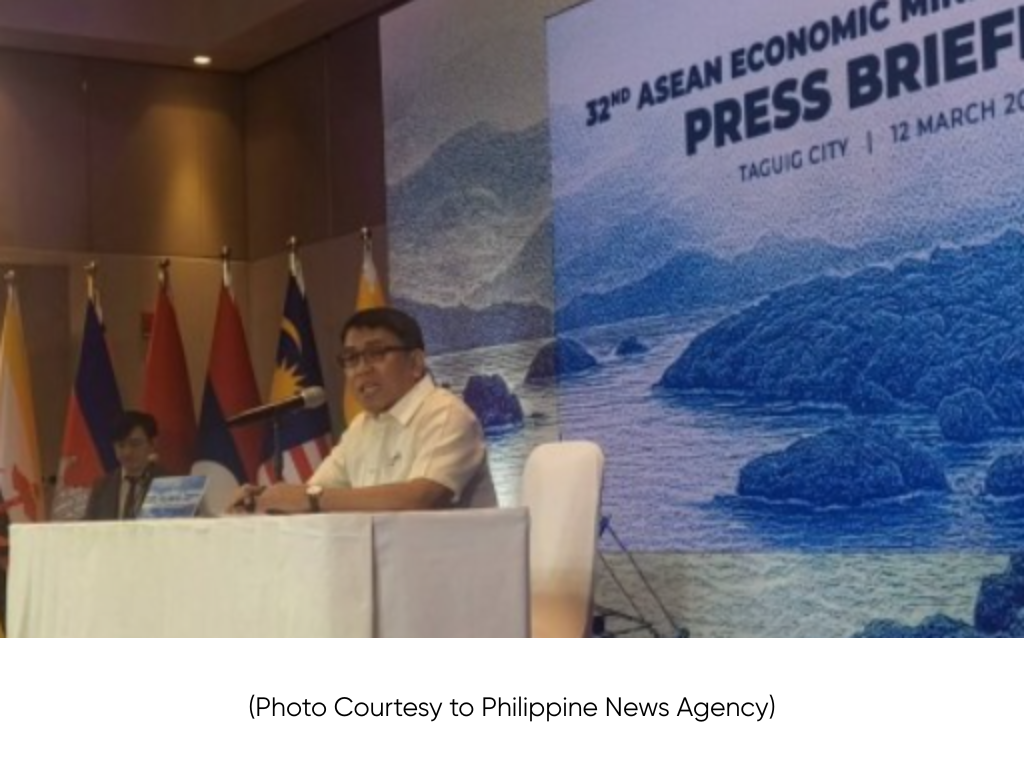
Department of Trade and Industry (DTI) Undersecretary Allan Gepty, in a press briefing in Taguig City Thursday and a day ahead of the ASEAN Economic Ministers’ Retreat, cited the importance of working together “to ensure that the regional economic integration agenda that we have embraced remain intact.”
“And on this premise, it is important that our actions, responses to the ongoing conflicts must be synchronized so that we will be working together as we address these challenges, because we cannot afford to have a separate approach in addressing this conflict,” he said.
Asked for the effects of the policies of some countries in the region, Gepty said measures put in place by the member-countries should continue to provide for a regional market that “remain(s) open for trade and investment.”
“So, in other words, by working together, it is important that any and all policy measures that we will adapt and implement must be consistent with regional economic integration agenda, and therefore must avoid measures that will be considered or will resort to non tariff barriers, or will resort to trade barriers in the process,” he said.
Gepty cited export restrictions as an example of non-tariff barriers.
“That's one core scenario that we will try to avoid. Because, as mentioned, we have to make sure that the supply chain, particularly on energy, food and other vital sectors, must remain intact. So, we will avoid any disruption in the process. So we need to help each other to address this current problem,” he said.
The trade official also underscored the importance of coordination among ASEAN member-states with regard to the US government’s investigation into Section 301 (b) of the Trade Act of 1974, which involves the structural excess capacity and production in manufacturing sectors that are allegedly discriminatory to the US.
He expressed hope that the investigations “will be consistent also with the international trade rules.”
ASEAN members include Brunei, Cambodia, Indonesia, Laos, Malaysia, Myanmar, the Philippines, Singapore, Thailand, Timor-Leste, and Vietnam. (PNA)
 Log in with Google